History of “Chief”
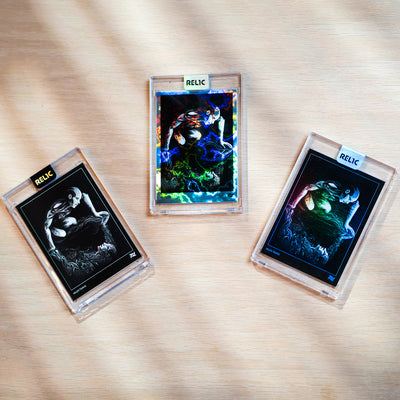
"Chief" originally debuted as Pearl Jam poster for the band's show in Alberta, Canada on September 23, 2011. Emek was taken by the struggle of the native tribes of the region who had lived there for centuries, who were catastrophically affected by the environmentally devastating tar sands at the origin of the controversial Keystone XL pipeline. "In my depiction, the figure is proudly made from old discarded spare parts needed to withstand his diminishing environment, and his headdress is made of solar panels" says Emek. Like many of Emek's concert posters over the years, "Chief" has become much more than a Pearl Jam poster. It presents an evocative portrait, rich in symbolic detail and executed with the precise line work that characterizes Emek's style. It speaks to the themes of identity, progress, and the loss of culture amidst the advance of technology.
 Series 001 · Wave 01
Chief
by Emek
$30.00 Sold out
Base card — edition of 200 — 3.5"x2.5"
Chase CardsPulled at random from every blind box
Rainbow FoilEdition of 25
Magma FoilEdition of 15
History of “Chief”
"Chief" originally debuted as Pearl Jam poster for the band's show in Alberta, Canada on September 23, 2011. Emek was taken by the struggle of the native tribes of the region who had lived there for centuries, who were catastrophically affected by the environmentally devastating tar sands at the origin of the controversial Keystone XL pipeline. "In my depiction, the figure is proudly made from old discarded spare parts needed to withstand his diminishing environment, and his headdress is made of solar panels" says Emek. Like many of Emek's concert posters over the years, "Chief" has become much more than a Pearl Jam poster. It presents an evocative portrait, rich in symbolic detail and executed with the precise line work that characterizes Emek's style. It speaks to the themes of identity, progress, and the loss of culture amidst the advance of technology.

The Artist
Emek
Emek is a legendary American designer, illustrator, and fine-art painter. In his posters, psychedelic ‘60s imagery collides with ‘90s post-industrial iconography — the organic vs. the mechanical — with humor, social commentary and fantasy.